Climate mitigation
A direct, measurable reduction in the emissions driving climate change.

Eight structural and geotechnical disciplines, photovoltaic solutions, agrivoltaic projects, and the logistics that delivers specified material to site.
Select a discipline to explore its full scope.
The preliminary work that turns a site into a buildable, financeable plan, from the first analysis of the terrain to the signed documentation.
Determining the site's energy requirements, from historical consumption or projected demand, to size the PV system correctly.
Determining the structural design parameters of a photovoltaic installation and the wind and seismic load reports derived from them.
Assessment of the wind forces that can act on a photovoltaic system at a particular location, using the wind data the structure will face on that terrain.
Relevant national and international codes (ASCE 7, Eurocode) alongside local building requirements.
Scale-model testing where complex projects or highly variable wind conditions justify it.
Assessment of the ground motion and seismic forces a photovoltaic system may experience at its location, to size the array against those conditions.
National and international seismic codes (IBC, Eurocode 8) with local building requirements.
Analysis and design of the tables, foundations and connections that carry the modules and keep them stable, durable and correctly oriented under the site's loads.
The comprehensive document demonstrating a project's structural integrity and safety, prepared and stamped by a licensed engineer.
On-site testing of anchoring structures across soil types. Profiles are driven into the ground and simulated service loads applied, to measure displacement and obtain the actual bearing capacity.
High-precision measuring equipment and specialist technical personnel, applied to optimising the design and installation of photovoltaic systems.
The measured bearing capacity and mechanical performance of the pile in the site's soil, to compare against the values assumed in design.
Assessment, instrumentation and monitoring of the steel structures of a photovoltaic plant. Non-invasive studies on piles and metal structures detect tilt, deformation, vibration and corrosion.
It validates in the field what was predicted during design and reduces structural risk across the plant's service life.
We review, validate and develop the calculation tools behind structural design. Our work covers calculation review against local codes, development of spreadsheets for the design and review of steel elements in IR and OC profiles, and the assessment of elements subject to bending, compression, shear, combined bending-compression and bending-torsion. We apply design criteria by strength, by load and resistance factors, and by allowable strength.
Renewable energy has become essential to sustainable development. By harnessing wind, water and sunlight, society can grow while protecting the planet for the generations that follow.
A direct, measurable reduction in the emissions driving climate change.
Falling generation costs that make clean energy increasingly competitive.
Greater independence and less reliance on imported fossil fuels.
In step with global sustainability policy and the path to zero emissions.
Building solar farms at large scale has amplified the impact of solar radiation worldwide, turning sunlight into a utility-scale generation source.
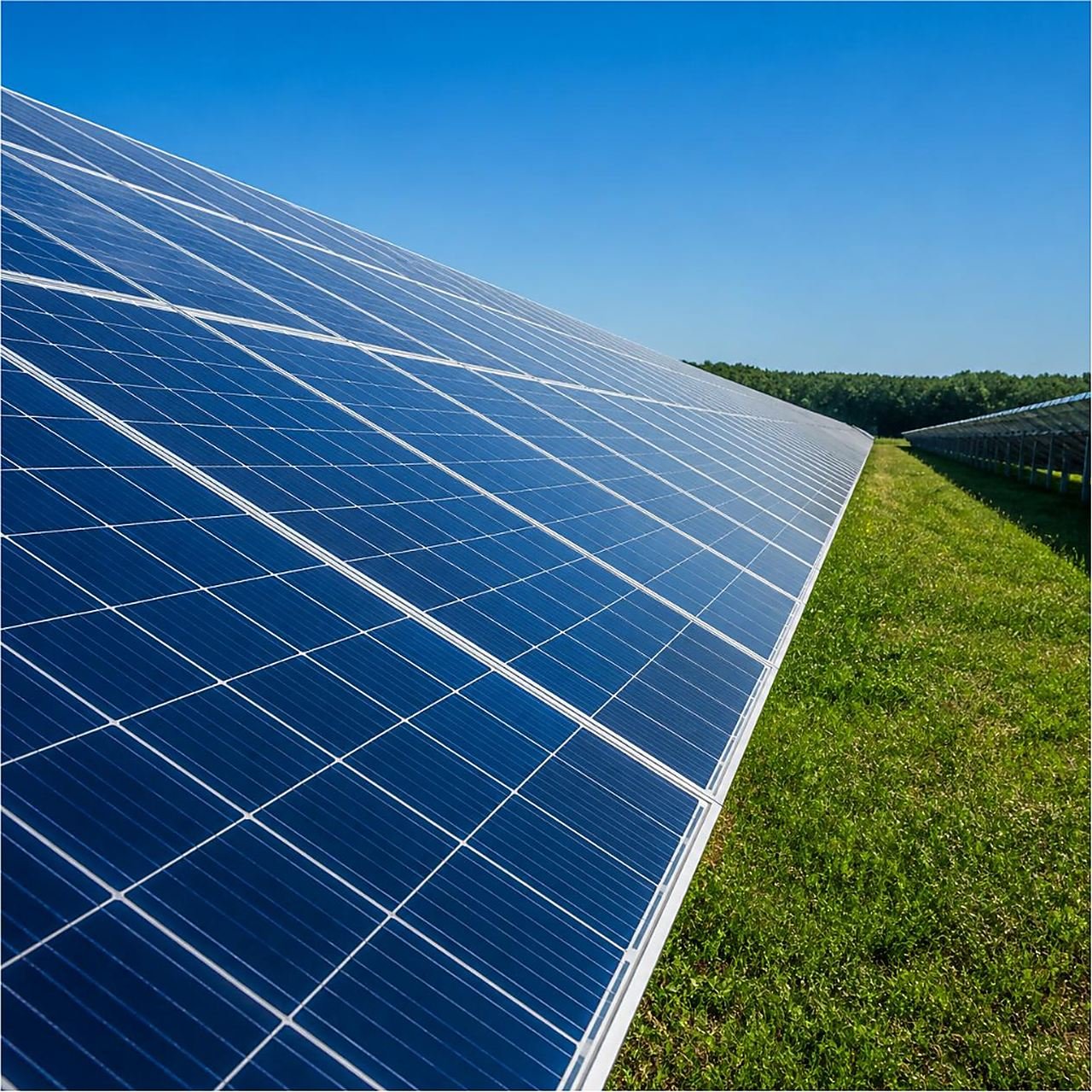
Photovoltaic systems divide into off-grid and grid-connected installations, and serve a wide range of uses, on Earth and beyond it.
| Category | Applications |
|---|---|
| Aerospace | Satellites and the International Space Station |
| Ground-based | Telecommunications infrastructure · Electrification of rural and remote areas · Street lighting and water pumping |
| Utility scale | Photovoltaic power plants · Solar farms · Photovoltaic buildings |
Connected, encapsulated solar cells that convert the photons of solar radiation directly into electrical energy.
Manages the charge and discharge process, protecting the installation from damage across its service life.
Batteries convert and store the electricity generated by the panels, and deliver it for consumption when it is needed.
Solar farms use hundreds of thousands of panels to produce direct current, which inverters convert to alternating current for consumption. According to IRENA, more than 20 GW of photovoltaic capacity was installed in Latin America in 2024 alone, 4.4% of the global total, with close to 10,000 solar farms operating today across 148 countries. The region combines one of the best solar resources on the planet with some of the most demanding terrain and seismic conditions.
| Study | Scope |
|---|---|
| Steel profile sizing | Using the data from preliminary studies to determine the grade, length and dimensions of the steel, accounting for corrosion, dead load, live load, wind load and seismic conditions. |
| Geotechnical studies | Determining the soil properties at the site where the steel profiles carrying the modules will be driven. |
| Hydrological studies | Assessing precipitation levels to guide site preparation and prevent water erosion on site. |
| Wind studies | Gathering gust data to guide correct sizing of the support profiles. |
| Pull Out Tests (POT) | Carried out on site, driving profiles into the ground and applying simulated service loads to measure displacement and verify performance. |
Solar generation and agricultural production on the same land.
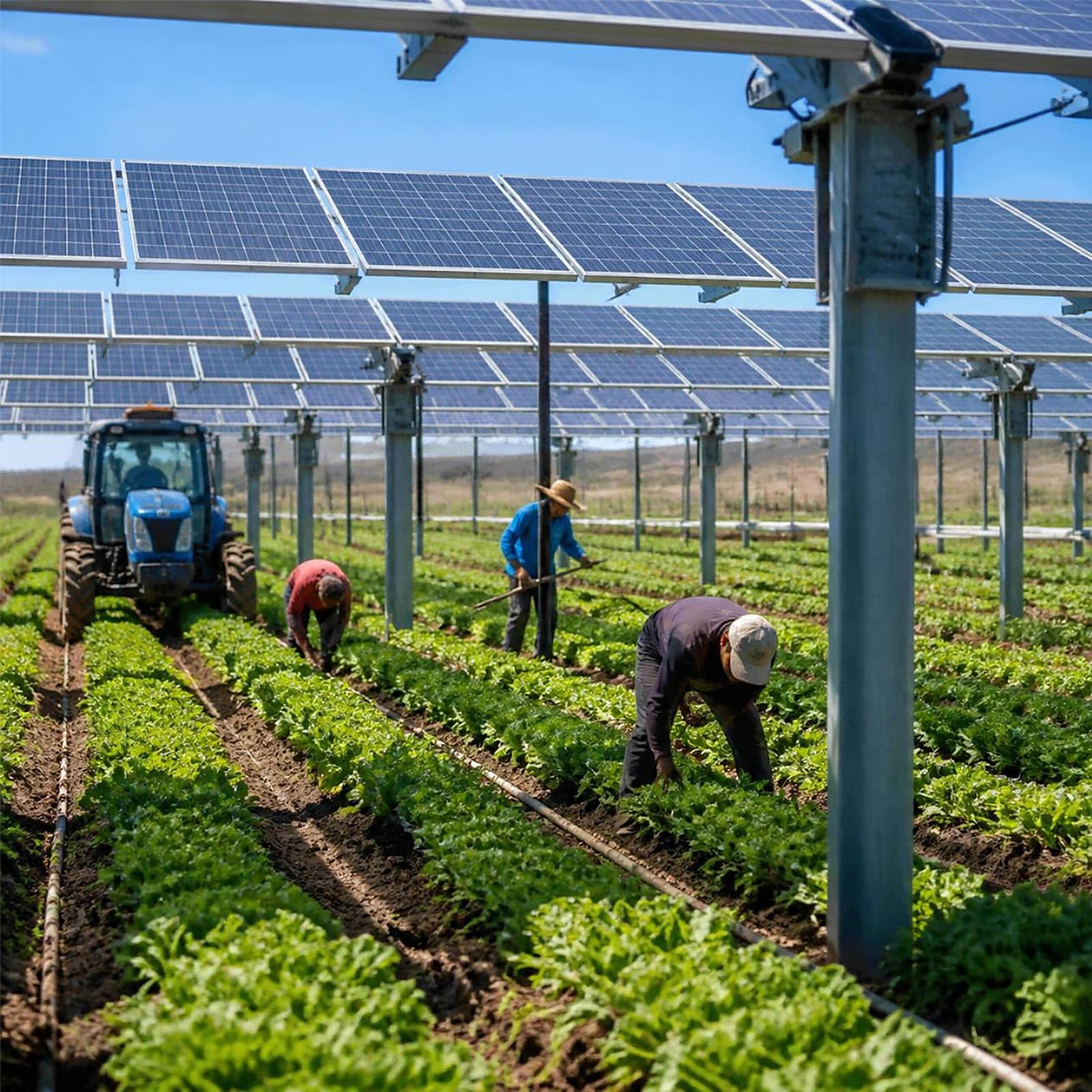
Agrivoltaics combines solar generation and agricultural production on one site, so that both activities coexist and reinforce one another.
At Vektro Energy we design agrivoltaic projects addressing every variable, solar, agronomic, structural, electrical, environmental and financial, before committing investment to detailed engineering.
We analyse terrain, climate and water availability to determine whether a site has real agrivoltaic potential, before investing in detailed engineering.
We design the coexistence between the solar installation and the crops: crop selection, structure height and orientation, and shading simulations balancing energy against agricultural productivity.
We optimise generation within the agrivoltaic context: string and inverter design, protection equipment and monitoring systems.
We select and size the supporting infrastructure: foundations, profiles, access roads and drainage, accounting for wind and seismic loads and the soil conditions on site.
We verify compliance with the environmental regulations in force, including impact assessments, carbon footprint analysis and permits.
We close with CAPEX and OPEX analysis, energy and agriculture scenario simulation, and the business model supporting the decision.
We assess whether a site suits an agrivoltaic system, analysing solar potential, soil conditions and topography. It delivers a viability rating of high, medium or low, the risks identified, and recommendations for the following stages.
We propose an initial configuration of panels and crops optimising available space, solar radiation and agricultural yield, with 2D/3D modelling, crop selection and a preliminary estimate of energy and agricultural output.
We integrate the electrical, structural and agricultural design into a complete technical proposal, validated against the codes in force, with financial analysis of IRR, NPV and payback period.
Our engineering team combines experience in solar energy, structural design, geotechnical studies and agronomy, backed by first-rate simulation tools.
We stay with each project from initial assessment through to final financial evaluation, with technical reports that support decision-making at every stage.
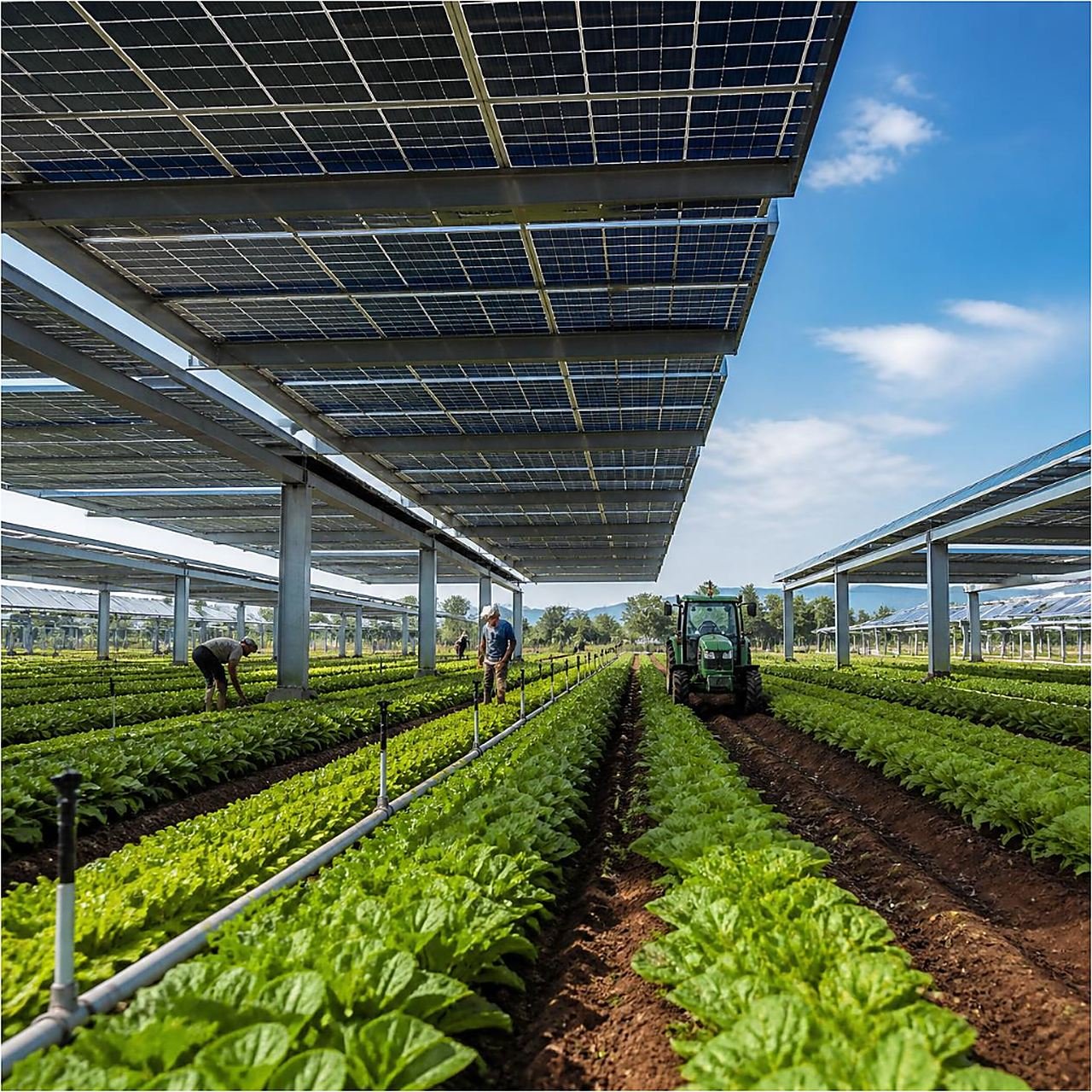
We manage the procurement, importation, transport and delivery of the material and equipment a renewable energy project needs, working from the specification our own structural engineering issues.
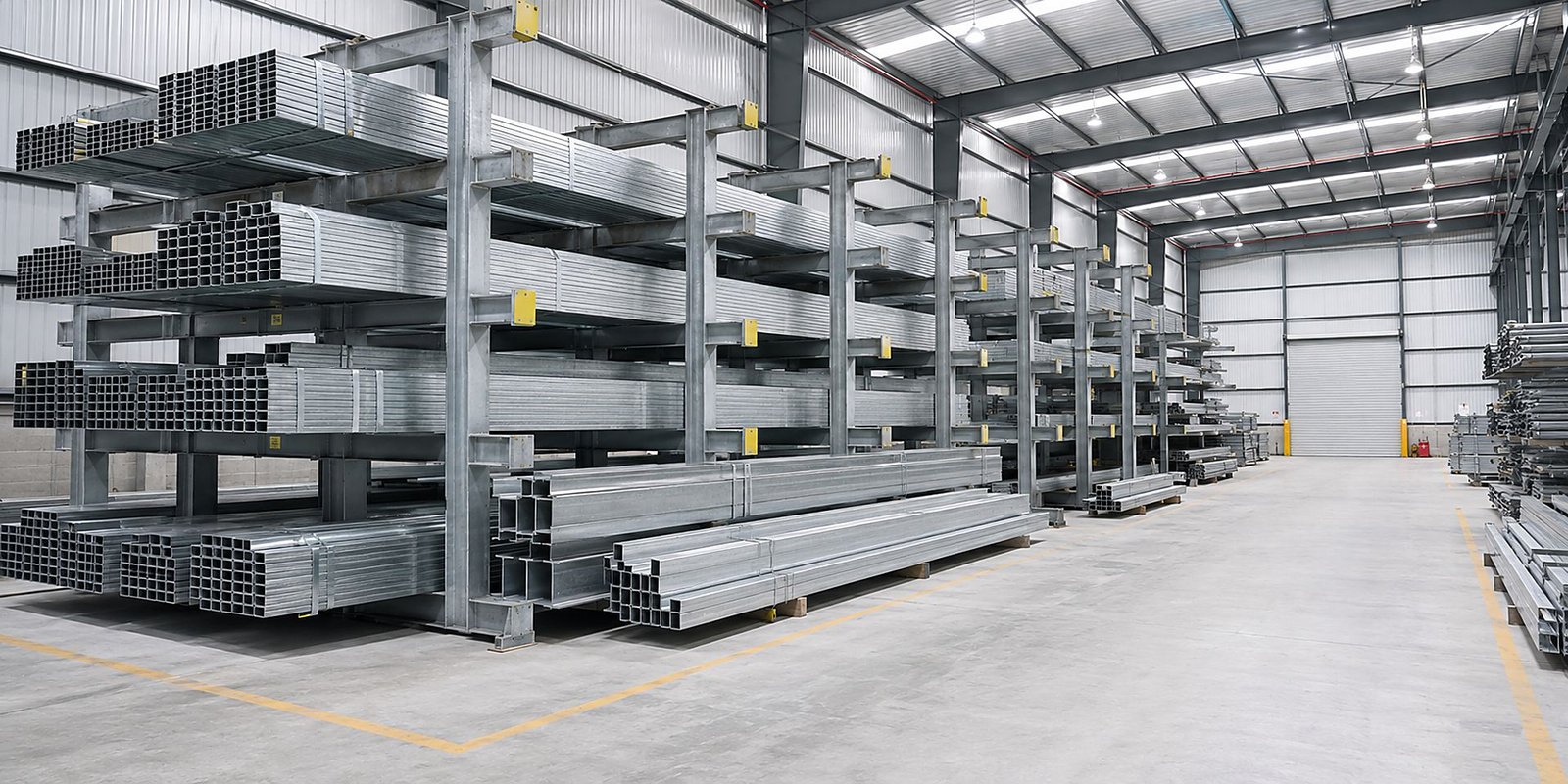
A calculation report specifies a steel grade, a length and a corrosion coating. When that specification passes from the engineering firm to the buyer, from the buyer to the distributor and from the distributor to site, it gets substituted for whatever was available and approximated.
At Vektro Energy the same organisation that defined the requirement procures it, imports it and delivers it, and answers for both parts.
We translate the technical specification into an executable purchase order: identification of qualified suppliers, technical and commercial comparison, negotiation, fabrication tracking and lead-time control against the project schedule.
We manage the import and export of technology, equipment and materials for renewable energy projects, including documentation, classification, customs clearance and coordination of international transit into Mexico and Latin America.
Purchase, sale and leasing of specialist tools and equipment for the renewable sector, including the testing and measuring equipment field studies require. Leasing covers one-off needs without tying up capital.
We represent international manufacturers operationally and commercially as they enter or grow in the Latin American market, providing a local network, ongoing technical support and on-site presence.
Operation, repair and maintenance of specialist equipment and spare parts, with preventive and corrective programmes at generation facilities.
Supply of qualified technical personnel for the stages that require it: pile-driving crews, instrumentation, field testing and site supervision, to the safety standards the operation demands.
The requirement comes from the structural calculation report.
Suppliers assessed on their technical capacity to meet the specification.
Documented tracking of every line item, from order to receipt on site.
Customs documentation, material certificates and traceability for audit.
On-site check of what was delivered against what was specified.